Genre and Conventions
The trailer’s genre is thriller/horror. In preparation, we watched some horror/thriller movie trailers, It and Cabin in the Woods. We observed a pattern of in the two trailers.
- A peaceful beginning, or equilibrium where all is normal
- Suspenseful text is interposed between shots, raising the tension
- There is a dramatic shift with auditory visually cues, usually after studio credits
- The most tense moments have an absence of music followed by an explosion of sound
- Shots get progressively faster and quicker
- Final shot is long, and usually the most tense
- The final shot is the title of the movie with a final musical sting
Story Board
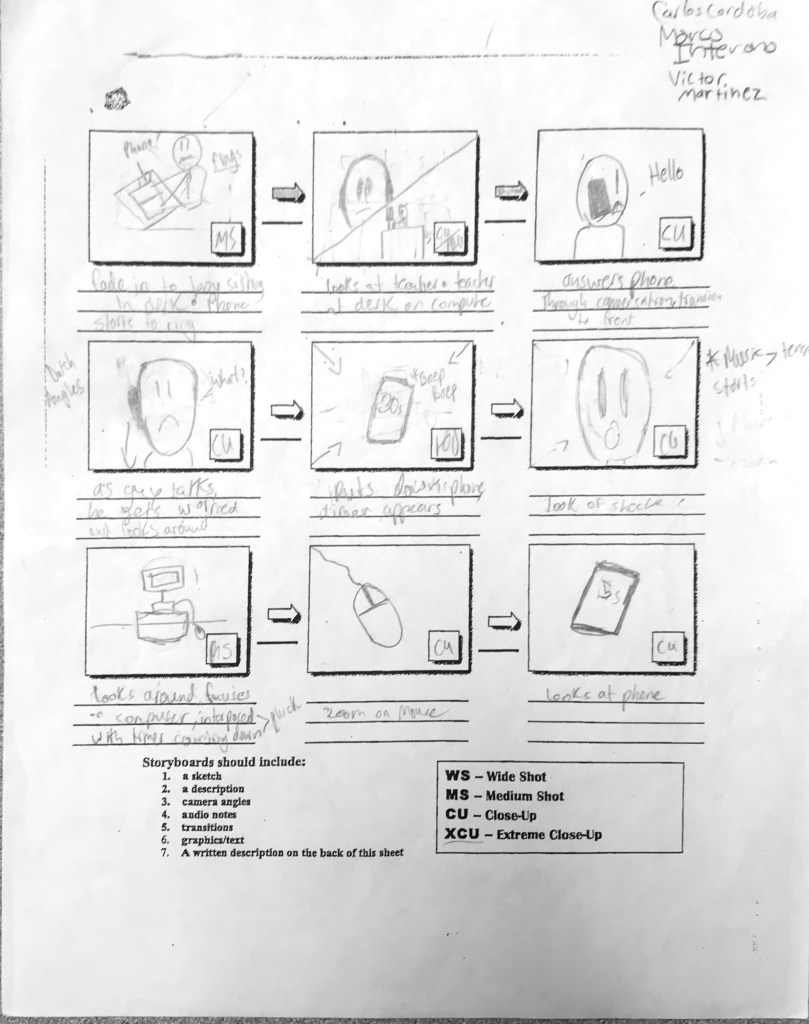
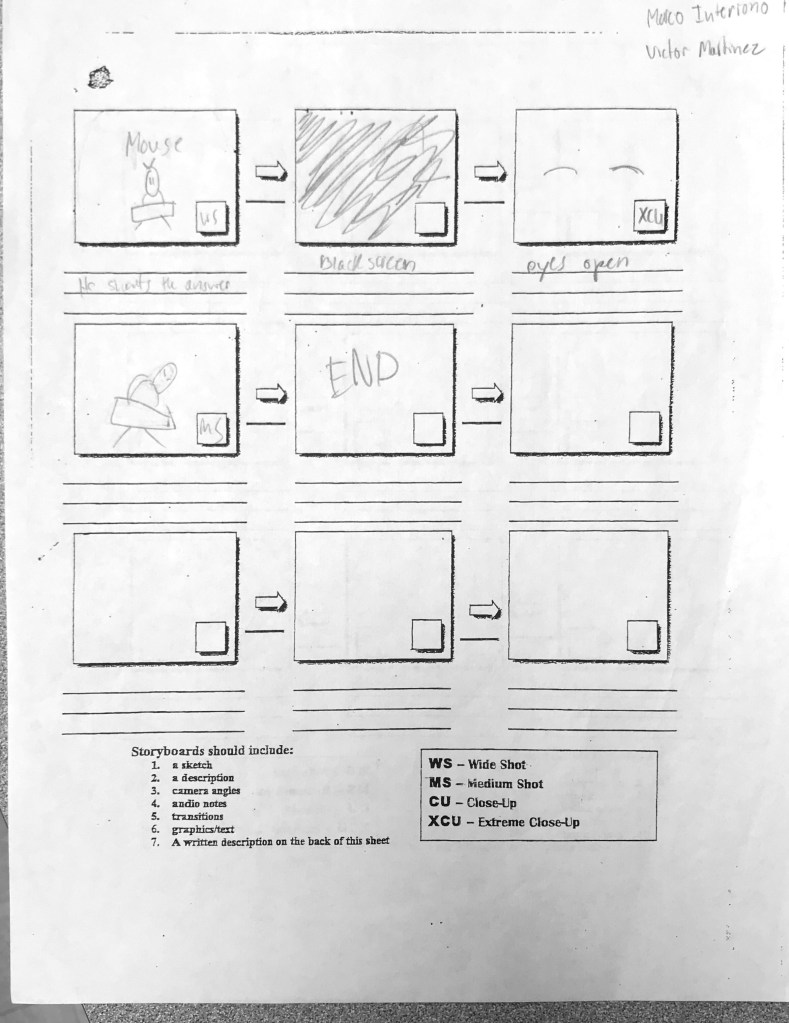
In terms of the storyboard, I tried to make interesting shots that could convey meaning. In planning, I tried to make realistic expectation for myself and my group. For the most part, we followed the storyboard. Also, in the storyboard, I tried to outline what kind of audio I wanted to use. The music and the diegetic sound were important parts of the trailer I wanted to plan as well as the dialogue.
Script
In the script, I made sure to plan locations and dialogue. While filming, however, things became complicated. I miscalculated on how many people were participating in our film and forgot to account for a cameraman. To solve this, we deleted a character from the script, leaving only three main characters in the trailer. The lines that were attributed to Karter were given to other characters. The dialogue did not delineate very much from the script, save for a few word changes.
Location
When deciding the location of the trailer, we needed a place with water and greenery. The location also demonstrated a challenge with the lighting. With natural lighting, filming at night became difficult. A lot of the shots we did appeared low quality and it was hard to see.
Preliminary Questions
1) Rate on a scale of 1-10 how did your group work as a team. Support your rating. What could have made it a 10?
I believe my team worked at a 6. We had some communication issues and had some arguments on some ideas to implement. If we were able to communicate better and resolve arguments more amicably our team may have worked together better
2) Explain how you organized and prepared for the project. What went well and what could have been improved?
I drew the story board with help from the group. We also developed a script and a shot list to help with organization and planning. We had to change our script because we didn’t have enough actors, so we needed to get rid of a character. The audio, however, was well done, and I believe the music fit the visuals well.
3) What difficulties did you encounter when FILMING? How did you overcome them?
When filming, the lighting was a big issue as we filmed at night. We tried to make this better by using artificial lighting on our phones.
4) What difficulties did you face when EDITING?
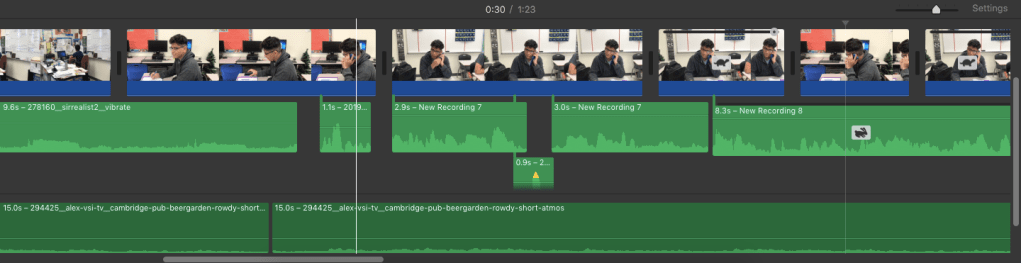
Editing the trailer was not too difficult for this trailer. Finding good music that fit the visuals was probably the most difficult part. Also, making sure the dialogue was heard with the music was also difficult.
5) Discuss how you prepared for the AUDIO of your film?
Because of previous experiences with dialogue, we prepared by buying mics. This really helped with being able to hear dialogue clearly.
6) If you were to REPEAT THE PROJECT AGAIN, what would you do differently?
I would make sure to film earlier in the day, so we don’t have to deal with little light. I would also prepare a little better with the script and storyboard .
7) ANALYZING THE FINAL PRODUCTION, what aspects are you happy with? What could have been improved?
Im happy with the visuals we chose to implement and the audio. I would fix the lighting and maybe sharpen up the dialogue a bit.
Trouble on the Trail
The Movie: https//youtu.be/D1h_mycG6Fo
 Carlos' AS Media Studies Blog