Analyzation of Characters

Crime dramas are almost always films about characters. Characters in crime dramas are usually complex and straddle the line between sympathetic and evil.

Tony Montana-Scarface

The now famous character of Tony Montana is the protagonist of Scarface played by Al Pacino. Montana is a character that is not given much backstory. When he arrives to America he is seen immediately hungering for power, slowly climbing the ranks of the drug trade. This greed says everything about Montana’s character. This greed motivates him in everything, leading to his quick rise to power, and his even quicker fall from power.

Michael Corleone-The Godfather

Another character famously played by Al Pacino, Michael Corleone is another staple of the crime drama genre. Michael never wished to be part of his father’s business, opting to college and then becoming a war hero. When his father dies, however, he is forced to become the new Don. Michael character is a quiet one, using few words. He is almost composed. This later leads to Michael’s cold and unfeeling nature when he becomes the Don.

Henry Hill-Goodfellas

Henry Hill, played by Ray Liotta, is the protagonist of Goodfellas. Since he was a kid, Hill wanted to be a gangster. He gets his wish as he is basically raised by a gang in New York. Hill’s story is one of faltering loyalties and his own self-interest. When Hill is arrested, Hill serves himself by telling the FBI the names of all his associates.

Representation in Media

What is representation?

Representation is a fluid, two-way process: producers position a text somewhere in relation to reality and audiences assess a text on its relationship to reality.

Gender

Media presents to an audience people, as well as objects, that are masculine or feminine. Usually, femininity focuses on beauty, size, physique, sexuality, and emotional. Masculinity usually focuses on strength, power, sexual attractiveness, physique, independence.

In terms of narrative, women are often represented as passive, rather than active. Victims are also predominately a women’s role, such as the overused damsel in distress. Even those protagonists who are women, are characterized by their beauty, to the near exclusion of any other values. These protagonists do not accurately display the actual thoughts and pressures of real women.

Men are often portrayed as the “lone wolf”. Transitions in media from the extremely muscular action hero to even the average office work being muscular has caused serious identity issues in teenage boys. Males in product promotion are the new remodels for young men, often leaving unrealistic body images and emotion.

Race

Race in media can often be represented by racial stereotypes. These stereo types are often based in propagated myths about a race or ethnic group. Thought many successful African-American actor, for example, have removed many of the “stock” characters, black representation in some media is often negative. Often media texts will portray a trashy individual, inviting viewers to make a downward comparison, categorizing these “trashy” characteristics to an entire cultural group.

Age

Age is probably the easiest way to separate ourselves from others. Young people are often represented as immature, stupid, gullible, careless, and selfish. Old people are depicted as outdated, slow, weak, unhealthy, and grumpy. Unlike those of race and gender, stereotyping in age continues to exist in mainstream media.

Age, like race, is something one cannot control. Despite this fact, many try to hide their age by dyeing hair, wearing youthful clothes, and plastic surgery. This is because society lifts youthful beauty on a pedestal and casts the wisdom and experience that comes with age to the side. Women are especially susceptible to this process, being criticized on both sides, young or old.

Disability

In media, common representation can be defined by three character types: victim, hero, and villain.

The victim is likely common stereotype. This person is portrayed as helpless and in need of help, an object in need of empathy and sympathy. This type of character may also be used for comedy, using the disability to place them in comedic situations.

The hero is the opposite of the victim. This character overcomes their disabilities and prove their worth. Those these may seem better than the victim, a stereotype is still a stereotype. This type of character presents a disability as a challenge to overcome to be normal. It teaches the audience that they do not need to accommodate a person with a disability, the person just needs to overcome it.

The third stereotype is the villain. Throughout cinematic history, physical disabilities have been use to suggest evil. Many villains are depicted being driven to crime because of a disability.

Sources

http://mediasmarts.ca/diversity-media/persons-disabilities/common-portrayals-persons-disabilities

http://www.mediaknowall.com/as_alevel/alevkeyconcepts/alevelkeycon.php?pageID=represent
Crime Drama Locations

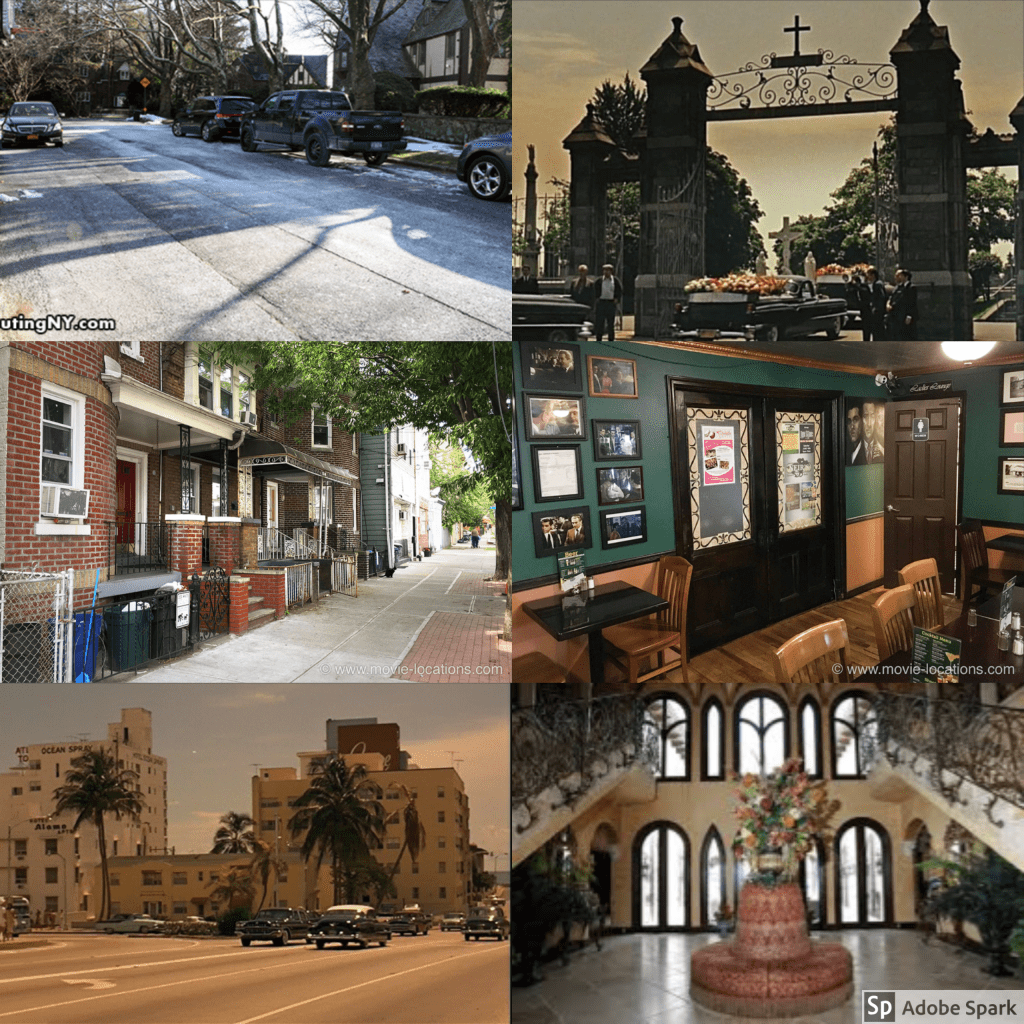
The board above depicts locations from several crime movies, including The Godfather, Scarface, The Godfather 2 , and Goodfellas. All the locations are urban areas and focus on the juxtaposition between poverty and prosperity. Locations are very important in crime dramas and are used to portray moods.

  • The suburban street from The Godfather is used to juxtapose the crime life and the average American lifestyle.
  • The cemetery punctuates the death of Vito Corleone with a somber mood and Gothic architecture.
  • The city sidewalk from Goodfellas is used to demonstrate the absurdity of organized crime among everyday businesses.
  • The restaurant also punctuates the point above, as these criminals converse and eat among the rich and corrupt.
  • The street from Scarface is very representative of the era and the high-life of Miami.
  • The stairway is also used to juxtapose the extravagance of the staircase and mansion with the bloodshed occurring in it.

Inspiration Part 3

Next, I will analyze the opening scene of Scarface as an inspiration for our film.

Scarface-Opening Scene

The opening of Scarface depicts Antonio Montana, a Cuban immigrant in America, being questioned by the government. The scene lets the audience have empathy for Montana while still being wary by his description of his life in Cuba. Montana is then taken away to a detention center because of a tattoo he received from prison.

The wardrobe of this scene, depicts a power struggle between Montana and the government agents. Montana is straight off the boat, wearing a guayabera and slacks, is starkly contrasted with the agent’s suits and ties. Montana’s clothing reinforces is cultural differences with the American men.

The camera does some interesting things in this scene. With minimal cuts and long takes, the camera focuses on Montana’s face, while hiding the agents faces. The camera slowly spins as the questions become more and more antagonistic. Tensions rise as the question of whether or not Montana will be able to stay in the country is raised.

As the music fades from the opening credits, our main character is introduced. There is no score during this scene. This allows the audience to focus entirely focus on the dialogue and Montana’s conflict.

Inspiration Part 2

Goodfellas is also going to be an inspiration for our movie. Below, I will analyze the opening scene of Goodfellas.

Goodfellas-Opening Scene

The movie opens with a car, the only sounds heard are those on the road. The camera moves into the car where the audience is met with three characters. The rhythmic sound of something hitting the car begins as the characters begin to question why. They pull over and open the trunk. A body, covered in a bloody, white blanket begins to move. One character stabs the man and the other shoots the man. As what is interpreted as the main character closes the trunk, narration is heard.

When analyzing sound in this opening scene, I noticed the lack of a score or music. The only sounds heard are the wheels on pavement and the heart beat sounding struggle of the man in the trunk. This lack of score emphasizes the other sound effects such as the knife going through the man and the gunshots. It also emphasizes the musical sting that occurs when the main characters says, “As far back as I can remember, I always wanted to be a gangster.”

The wardrobe of the three men are also important. All three are very well dressed, an image that is attributed to wealth and status. However, this expectation is subverted when the audience sees that the men have a dying man in their trunk which depicts their true profession.

The camera angles are also very important. The first shot opens with a car, from behind, in center frame. This immediately gives importance to the car, which is explained later in the film. The next shot shows our main characters, Jimmy, Tommy and Henry. The final shot is an up-angle of Henry Hill, showing his importance as the main character.

Inspiration Part 1

The crime drama genre is full of great movies to glean inspiration from. 3 movies I will analyze are The Godfather, Goodfellas, and Scarface.

The Godfather-Opening Scene

The Godfather opening scene showcases some major aspects that make this movie great. The movie opens on black with horns shifting into a man talking. The man’s face fades into the shot from the black as he discusses why he has come to the Godfather. Throughout his monologue, the camera backs away from his face, finally resting behind the Godfather.

The setting of this scene is Don Corleone’s office, in the 1940s. The room is dimly lit and the central focus is solely on the man speaking as the background is almost entirely enveloped by darkness. The lack of music also speaks to this, letting the audience solely focus on the character. As the camera moves away from him, more of the room is seen and context is given. The darkness gives way to Corleone and the two people watching the interchange.

While he is listening, Corleone sits attentively. To answer the man, Corleone stands up, a subtle show of power, and explains why he will not help the man. This dialogue depicts what the rest of the movie s about, respect.

The wardrobe is dress attire supporting the plot point of it being the day of Corleone’s daughters wedding. Corleone also has a rose in his jacket pocket depicting the class of the mafia.

Crime Drama Mood Board

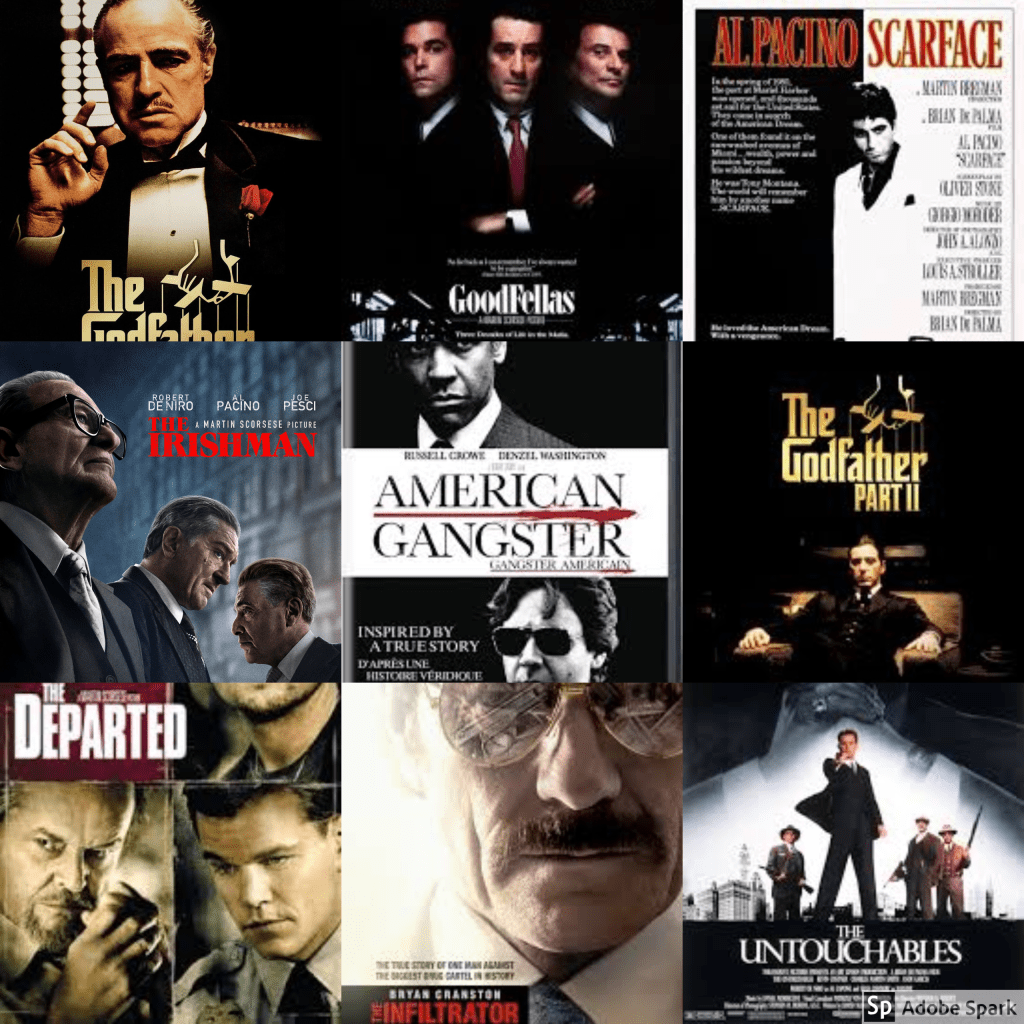
The crime drama is a fairly expansive genre, with many films filling the genre. Below, I comprised some of the best crime dramas as inspiration and sources to help create our own crime drama.

Analyzing the general mood of each poster, I sought after some similarities in what each film poster tries to portray. I also looked for things like similarities in color, lighting, character position, and wardrobe.


Similarities

  • Contrasting colors (usually white and black)
  • Dramatic lighting
  • Character looking at camera
  • Characters are the center of attention in the poster
  • Very serious looks on the characters face
  • Character are usually surrounded by darkness

Analyzing these similarities, my group and I will try to recreate the general mood in our own film.

Deciding Genre

When looking at all the genres we could feasibly do for our opening, we decided to eliminate sci-fi as it would be to difficult to do without CGI or a large budget.


I never really wanted to do a comedy because that requires a good script with good comedy throughout and that’s out of my, or anyone in my groups, skill set.


For westerns, our location does not fit the theme of the West.


Having done two horror/thrillers already, my group and I decided against doing a third because we wanted to try something different.


The same problem for sci-fi happened for the action genre too. It requires too large a budget for us to make well.


Our Genre

Finally, we decided to make a drama, specifically a crime drama. Our location of Miami fit the genre and I thought we could make a good story and script with this genre. With all this taken into consideration, a crime-drama would let my group and I make the best film.

Brainstorming Ideas

Brainstorming Ideas

  • Crime featuring an anti-hero
  • A characters downfall is an idea I would enjoy doing for a drama
  • A shifting personality, where a character goes from good to evil, or innocent to disturbed
  • The rise of a character’s power
  • A prideful character whose decisions are based on this pride
  • A character greedy for money and power
  • A plot where a character deals with a loss
  • Rival businesses try to gain each others power
  • Some kind of starving artist story
  • Character decides what to do with large inheritance sum

Discussing Genre

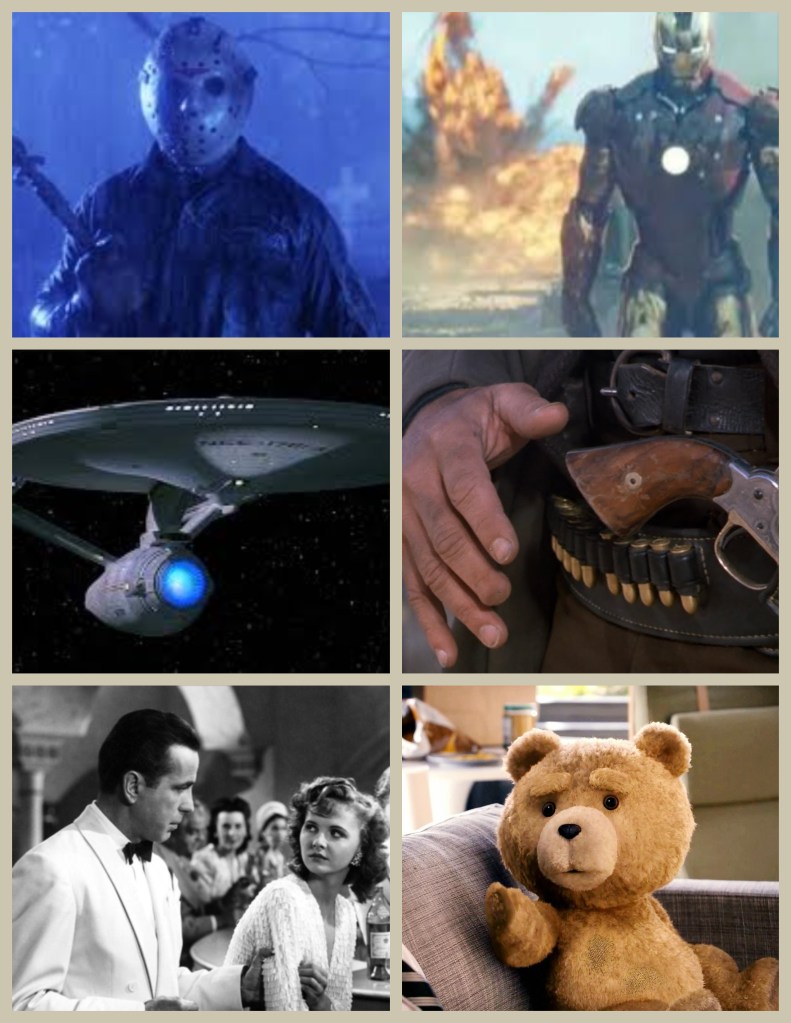
The first thing that needs to be done is deciding the genre for our film opening. We made a mood board in order to try to decide on one of these genres.

Each movie represents a genre in film I am interested in, the six here being horror, action, sci-fi, western, drama, and comedy.


Horror

The horror genre is meant to keep the audience on the edge of their seats. Jump scares, creepy imagery and music, and good vs. evil are all conventions found in this genre.

Action

The action genre is filled with excitement and, well, action. Heroes rising up to the challenge, explosions and exciting scenes, and epic finales are the convention found in this genre.

Sci-Fi

This genre is meant to display the often startling differences of the present and the future. Beautiful imagery of space and distant planets, new technology and scientific concepts, and interesting characters are the convention of this genre.

Western

Displaying the desert landscape of the West, this genre is famous for it tense duels, open landscapes, and stories of outlaws versus an ever controlling world. These are the conventions of this genre.

Drama

Dramas are films filled with compelling stories and characters, clashing personalities and relationship between characters, and the grays in the aspects of a character or situation.

Comedy

A comedies job is to make the audience laugh. Slapstick, situational, or straight-up jokes are found in this genre. Often containing quirky characters and a semi-compelling plot, comedies focus more on reactions than creating a compelling story.

Design a site like this with WordPress.com
Get started