Creative Critical Reflection

As my final blog post, I will look at everything I have done in creating multiple projects in this collaborative effort. I will specifically look back at what I did in working on Trouble on the Trail, our horror/thriller movie trailer. I will answer some questions to show how I have improved and learned through this journey.

Link to Film: https://youtu.be/D1h_mycG6Fo

Link to Prezi: https://prezi.com/view/s0vriDwFqGNvZScltMXQ/

Some Setbacks

Due to recent pandemics, our plan to film the unnamed crime drama has been canceled. So, I have decided to further analyze Trouble on the Trail, our horror/thriller trailer. I will do the Critical Reflection Questions on this trailer. In reference to our crime drama, everything but filming and editing was completed, and unfortunately, filming is not probable in quarantine. Stay safe!

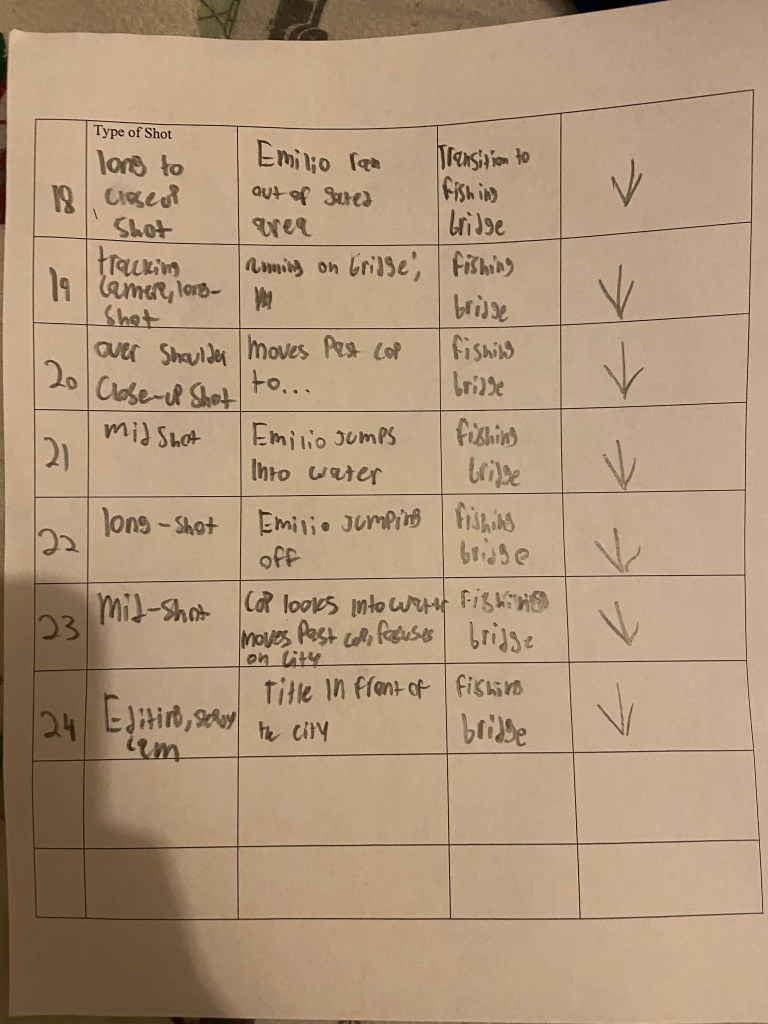
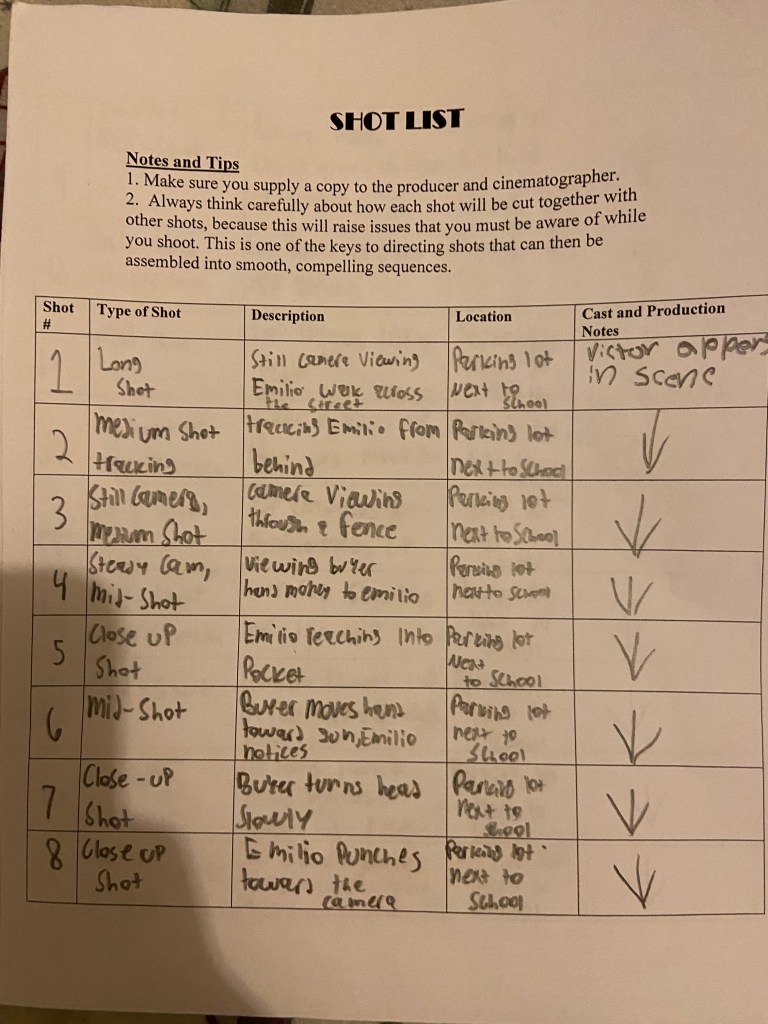
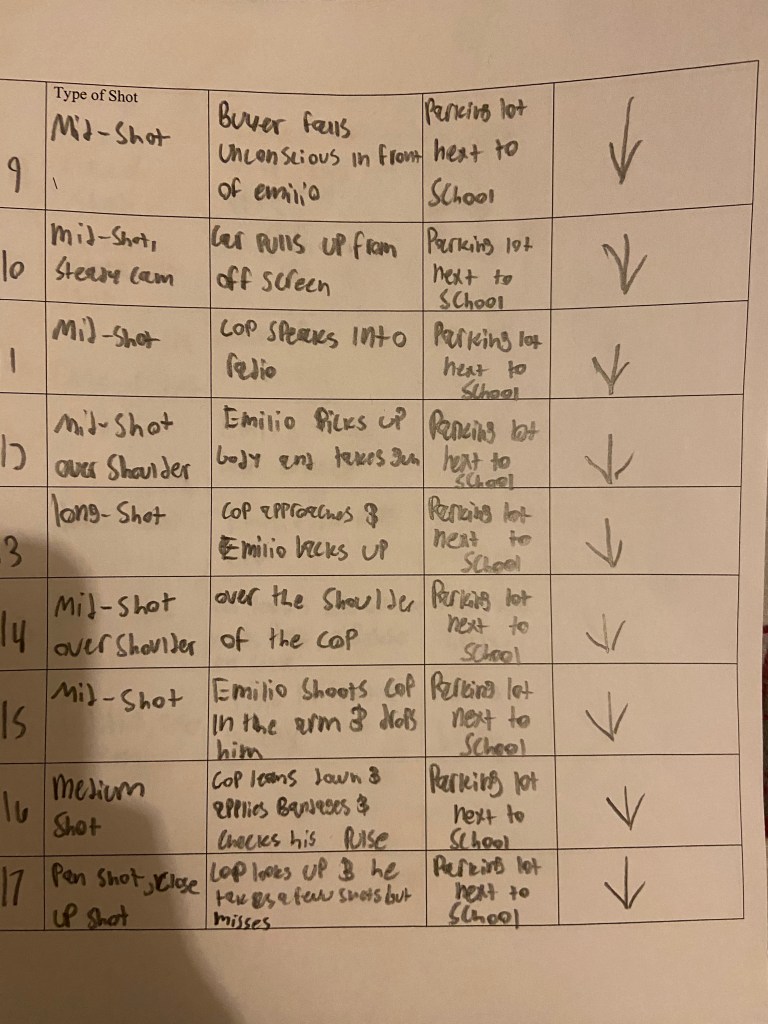
Shot List

The shot list is used to better plan the order of which we will film scenes. This is based on location, time of day, actors in the scene, and other factors. The shot list affects all aspects of shooting a film. Our shot list is relatively straight forward. Most of the scene go in chronological order as the location is mostly the same throughout. Because it is only two minutes, the actors are the same and everything else is relatively consistent.

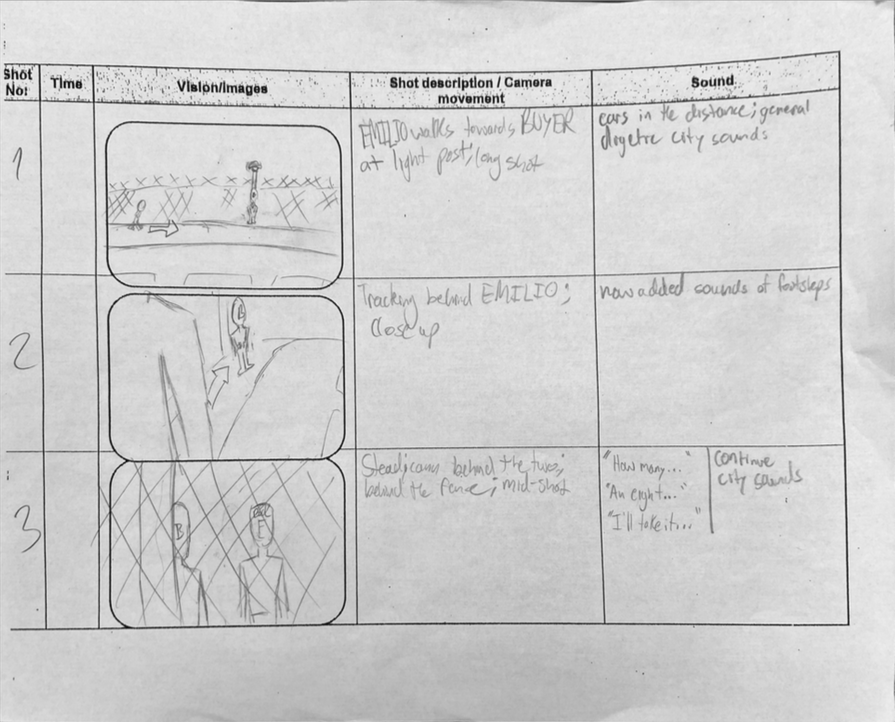
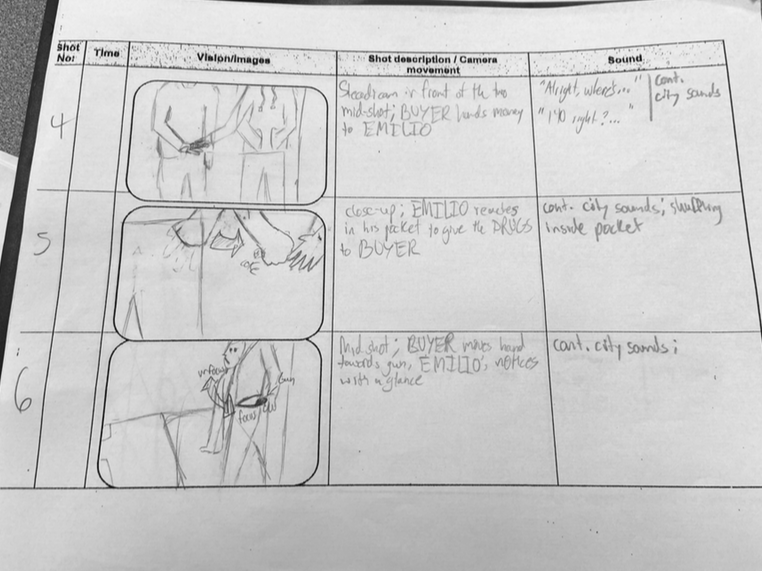
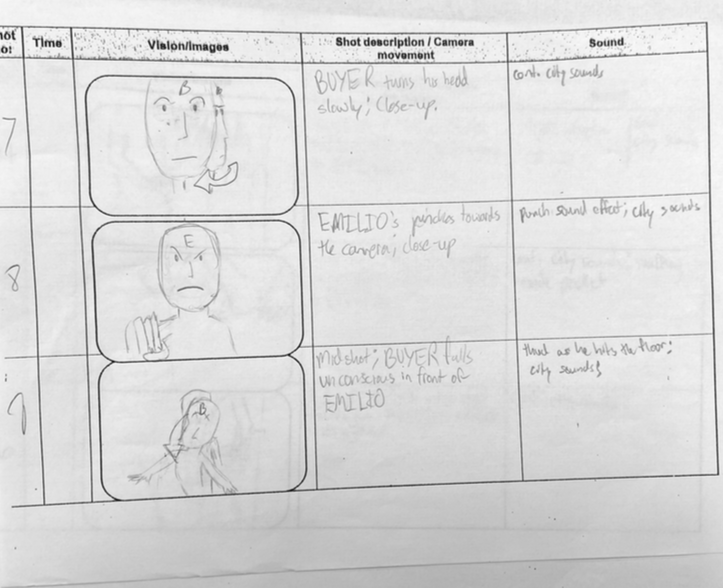
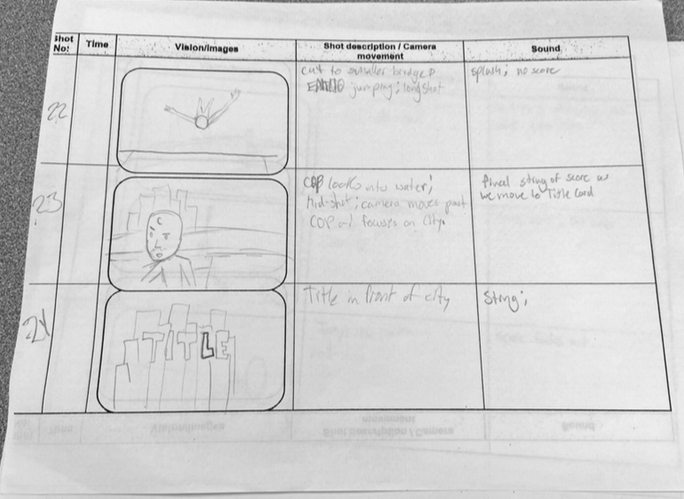
Story Board

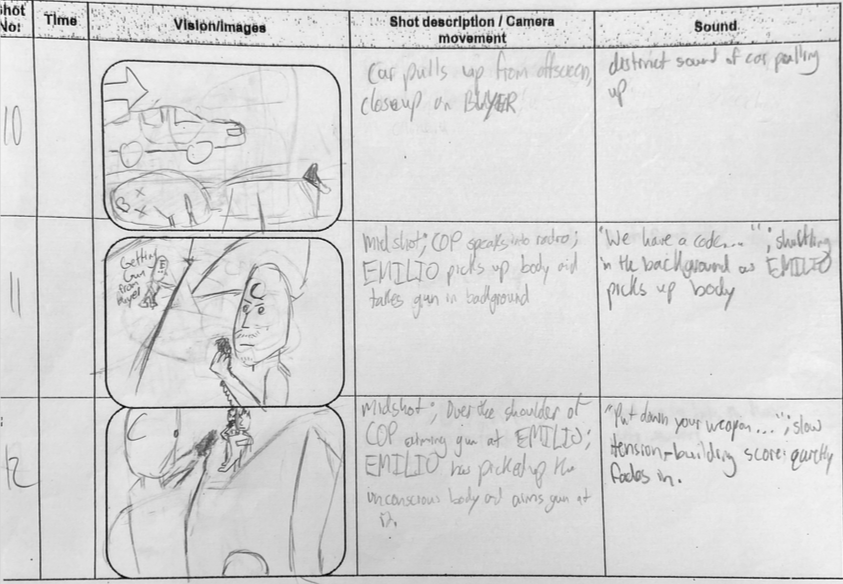
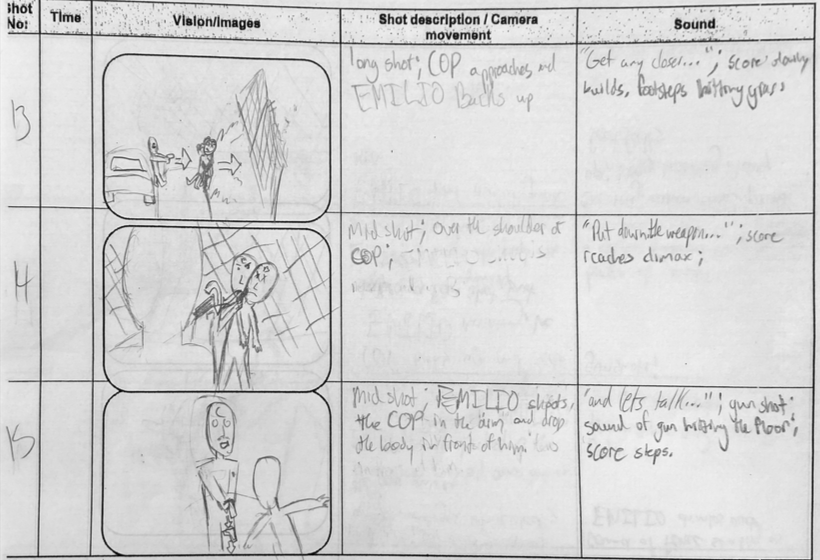
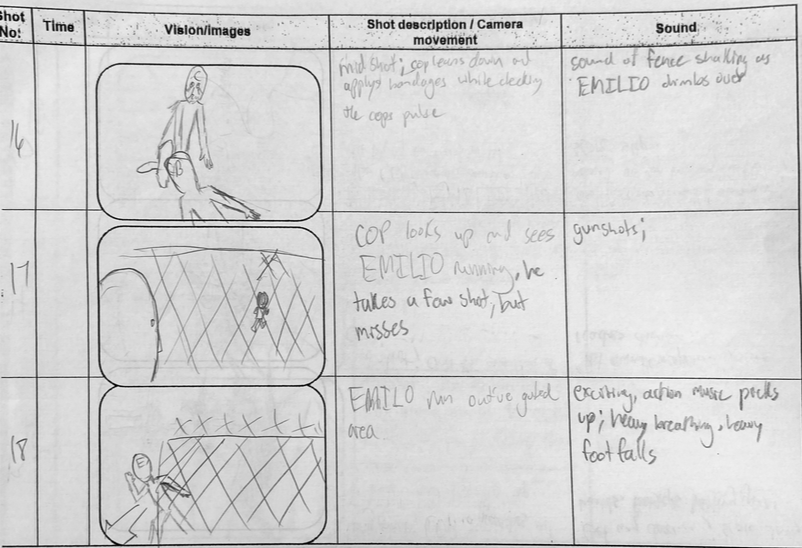
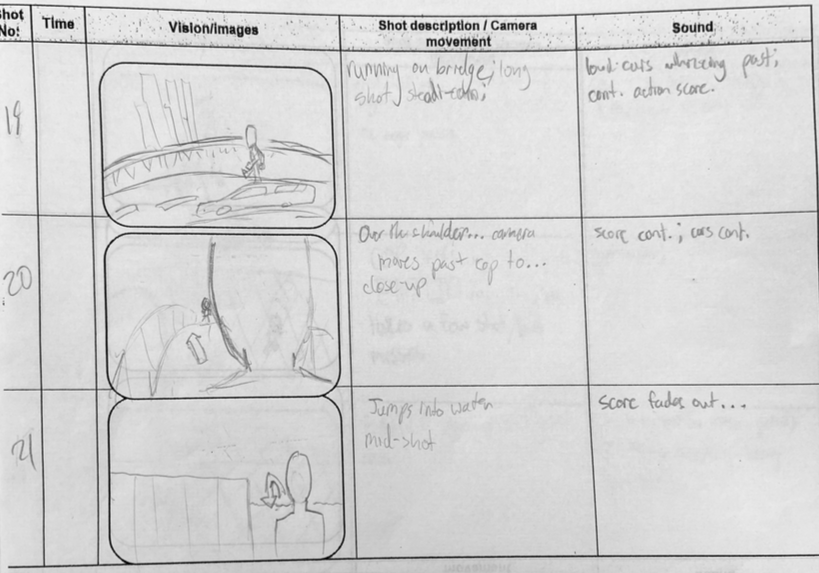
I was the story board artist. I drew the storyboard because I am also the cinematographer, meaning I used my vision to portray the camera angles, blocking and composition of the scene. During the filming, as cinematographer, I will use the storyboard as a guideline for lighting, angles, composition, and blocking. As editor, the storyboard will also be a guide for the sequence of the scenes, the audio, and special effects.

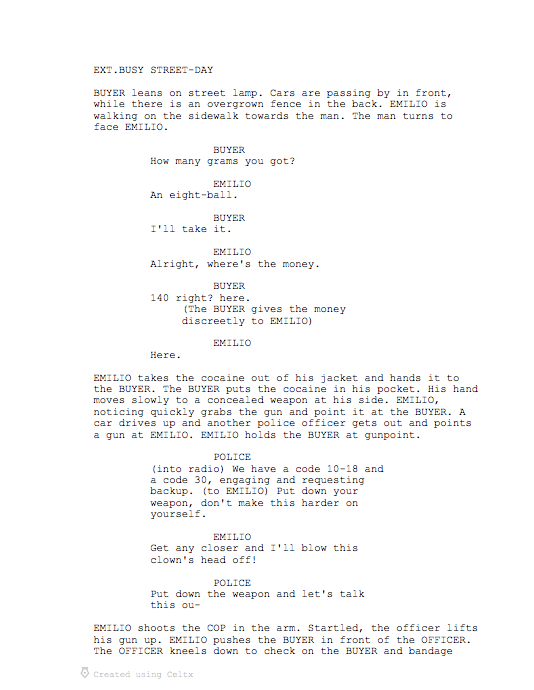
The Script

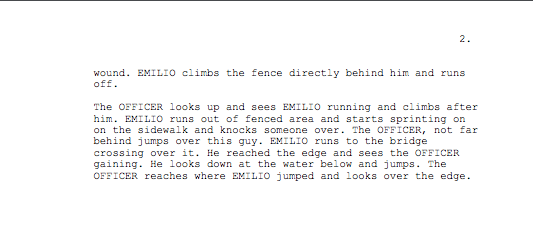
I was co-screenwriter for this opening. I wrote the dialogue to make sense and be interesting to listen to. The screenplay also maps out the film, aiding in creating the story board, which I am to draw, and filming, which I will also do as cinematographer.

Our screenplay has a good amount of action and also dialogue. As such, the screenplay looks rather short, but the action and title screens will amount to about 2 minutes.

My Role

Although making a film is a collaborative effort, every individual has their own role to play. My roles are listed as:

  • Editor- As an editor, I form the separate shots into a cohesive story. This role also includes sound mixing in dialogue, sound effects, and music.
  • Cinematographer- The cinematographer, plans and executes the angles and length of the shots.
  • Screenwriter- The writer creates the narrative and story of the film. I will write dialogue, action, and setting. The script will be used by almost every other role in the role.

Narrative Techniques

Propp Theory

This theory focuses on the relationship between characters and narrative. He argued that character actions and decisions drive the plot forward and develop the story. He classified character into certain roles:

  • Villain
  • Donor
  • Helper
  • Princess
  • False Hero
  • Dispatcher
  • Hero

Time and Space in Narratives

Manipulating time and space is a key part in constructing a strong narrative. This offers different points of view and contexts. Manipulation of time and space can also be used within the universe of the story.

Multi Stranded Narrative

These narratives don’t follow one storyline. This type of narrative utilize cliffhangers to encourage watchability. These narratives also link different storylines together.

Spit-Screen Narrative

This type of narrative splits the screen to create a number of mini narratives.

Flexi-Narrative

This narrative structure is the most complex, combining and interweaves many narratives together. These narratives to natural enigmas, where the audience wonders whats going to happen next.

Brainstorming Narrative

An introduction to a film should set the tone for the rest of the film while also making the audience interested. So, when deciding what to do for an intro, you have to know what you are introducing by have a semblance of a narrative for a full feature film. There are infinite directions a narrative could go, so I will discuss a few here.

  • The rise and fall of a character is interesting as it provides a clear contrast of a character before and after power. This narrative also allows for the personality arc of a character to be in sync with the plot arc.
  • A redemption story allows for a character to be redeemed through their actions. Similar to the rise and fall narrative, this type also provides a clear contrast of a character, this time before and after redemption. This often can lead to a satisfying ending.
  • A sad story portrays a character who has fallen on hard times. This character’s motivations are clear and relatable, making them connect more with the audience. The stories ending usually aren’t happy, ending with the character fully embracing immorality or dying in the process.
  • An adaption story focuses on the environment around a character changing. This narrative portrays how a character adapts to the changing environment, and how their own change contrasts with their former selves. This story ends with the character either ends with the character successfully changing, leading to self-conflict, or ends with the character failing.

These are the types of narrative that I am most interested in doing. These narrative could also be mixed with each other, stealing and removing aspects to create a more complex narrative.

Planning-Characters

Protagonist

One of the most important aspects of a film is the protagonist. In specifically crime dramas, the main character is usually the most interesting and complex in the film. I believe that the most important aspect for a crime film protagonist is the level of sympathy the audience has for them. After much debate, we decided to craft a character that was sympathetic, as his motivations were reactionary and understandable.

Other characters

Whether its organizations, gangs, or families, organized crime requires a close-knit group of people. The tensions, friendships, and respect that goes into these gang relationships are what make these movies so intriguing. Therefore, the supporting character are just as important as the protagonist. A variety of distinct personalities makes these relationships interesting.

Antagonist

Antagonists in crime dramas are very interesting. Usually, the antagonist is not one character. The system, for example, is one. This means that there is always the fear that the characters will get caught. More prominently however, the antagonist is the moral deterioration of the protagonist. One example of this is Scarface. In this film, Montana’s biggest enemy his own ambition and greed.
Design a site like this with WordPress.com
Get started